
'Last year (FY21), we had about 1 million intimated claims for Covid.' 'This year (FY22), in six months, we got about 1.6 million claims.'

Rapid strides in digital payments notwithstanding, the Indian economy will likely remain cash-dependent for many years to come, at least that's what the automated teller machine makers and cash logistics companies are betting on. After growing at over 20 per cent for most of 2020, currency in circulation growth fell to 8.5 per cent as of October 29 this year, shows data from the Reserve Bank of India (RBI). The reason for the steep rise in currency last year was the uncertainties related to the Coronavirus (Covid-19) pandemic, where people preferred to hoard cash to meet exigencies.

'There will be partnerships between banks and fintech firms, but there will also be areas where they will be direct competitors.'

Reliance-Google's new smartphone has got mixed reviews from analysts and brokerages. The phone pricing is seen unattractive for low-end customers and bundled offers are being viewed as non-disruptive. While this could slow the pace of adoption, it could set the stage for tariff hikes in the industry, feel analysts.
Bharti Airtel aims to leverage its 180 million plus digital service customers and its wide presence in rural areas to grow its payment bank business. "We are well placed as we can leverage the 180 million plus customers we have across our digital assets. "We offer a plethora of services such as lucrative interest rates, gift cards, FASTag, telecom recharges, payments and debit cards. "Our large merchant base of more than eight million allows us to drive both engagement and monetisation.

Credit card spends jumped 57 per cent year-on-year (YoY) in September, aided by the festive season. According to the latest Reserve Bank of India (RBI) data, in September, credit card spends totalled Rs 80,477.18 crore compared to Rs 77,981 crore in August, thereby registering a 3.2 per cent growth sequentially, despite the high base. In the corresponding period last year, credit card spend was to the tune of Rs 51,356.68 crore.

The acquisition will give the Tatas a firm footing on international routes and generate economies of scale.

More than three weeks have passed since the Reserve Bank of India's (RBI's) new guidelines on e-mandates for recurring payments came into effect but consumers are still taking to social media platforms to complain about the disruptions they are facing. This comes as most stakeholders in the ecosystem have not put in place systems in accordance with the new rules, resulting in many transactions not going through. Industry sources said most banks are still not ready, especially the smaller ones.
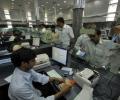
Nearly two million e-mandates for recurring payments have been registered with banks and card networks after the Reserve Bank of India (RBI) made it mandatory from October 1 to take prior consent of a customer before debiting her account, sources in know of the matter said. Industry estimates peg the recurring transactions at approximately 2.5 per cent of the total volume of transactions, and about 1.5 per cent in terms of value. Of these, around 75 per cent of domestic recurring transactions, and about 85 per cent international recurring payments are below Rs 5,000.

After the second wave of the pandemic, general and health insurers have seen a fall in their outgo of Covid-related health claims. In the July-September quarter (Q2 of FY22), insurers settled a little over Rs 5,000 crore worth of Covid health claims. This is 35 per cent lower than the Rs 7,700 crore worth of claims they settled in Q1, sources said.

Travel companies are expecting a heavy rush to the US following the withdrawal of curbs on fully vaccinated travellers from select countries, including India, on November 8. The move will benefit those holding long-term tourist, business, and work visas. Also, new and extra flights by Air India and American Airlines are expected to provide better travel options.

The Tata group may have to deploy upwards of $1 billion to improve the airline's passenger reservation system, upgrade and refurbish Air India's fleet, primarily the wide-body aircraft which are the mainstay for the airline's international operations, people in the know said. While the group has not yet decided on how it intends to integrate Air India with its existing airlines AirAsia India and Vistara, sources said the first task will be to refinance Air India's existing loans, upgrade its aircraft gradually, and rewrite multiple business contracts with vendors and suppliers. "They will have to do 100 things to stabilise the airline and will have to put in a lot of money," DIPAM secretary Tuhin Kanta Pandey said, confirming that many aircraft are grounded.
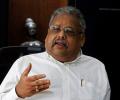
In the season of aviation action, Rakesh Jhunjhunwala-backed Akasa Air has secured the crucial no-objection certificate (NoC) from the civil aviation ministry. It expects to start operations next summer. The airline will now have to apply for the Directorate General of Civil Aviation for operations permit. Aviation sector has been in the limelight with the Tata Group winning the Air India bid last week.
Mukesh Ambani-led Reliance Jio has introduced a 20-per cent cashback offer on select prepaid plans, intensifying competition in the Indian telecommunications (telecom) market. Jio is the largest telecom service provider in India, with 443 million subscribers as of July. Jio's cashback offer will drive cross-selling across Reliance's various retail businesses, but the move is also being seen by some analysts as a signal that tariff hikes may not be around the corner just yet.

Vodafone Idea (Vi) is working on a fresh business plan that could alter its funding requirements. Addressing shareholder queries at the company's annual general meeting (AGM) on Wednesday, Vi chairman Himanshu Kapania said the exact amount will be worked out upon submission of a new business plan. "The management is working on a new business plan and will come to the board with the funding requirements," Kapania told shareholders in his first AGM as chairman.

Come October, life insurers may have to tighten their underwriting standards further for retail term plans at the behest of one of the largest reinsurers in the Indian insurance market, Munich Re. According to a source aware of the development, "Munich Re has been studying long-term mortality trends for the past few years, and has suggested some tightening in the underwriting process." "As far as financial underwriting is concerned, the reinsurer has suggested that insurers should ask for additional documents. "For example, apart from income proof, they can ask for bank statements of the prospective customer before issuing policies," added the source.

Twenty years after India's insurance sector was opened up, unshackling the control of state-owned companies, as many as 50 private players have set up shop. Along with their foreign partners, private players have brought about a sea change in the product offering, distribution and underwriting processes, and services levels. Yet, India's insurance penetration needle has not moved much.

Bumper-to-bumper insurance cover for new vehicles will not be mandatory as suggested by the Madras high court in its order last month. Instead, the decision to make it mandatory or not will be left to the legislators and the parliament. On Monday, the court decided to modify its order, which had said that whenever a new vehicle is sold after 1.9.2021, it is mandatory for coverage of bumper-to-bumper insurance every year, in addition to covering the driver, passengers, and owner of the vehicle, for a period of five years.

It is Mumbai's favourite festival and is celebrated each year with fervour and frenzy. But when the city welcomes "Ganpati Bappa" this Friday, the celebrations will be low key. With a cap on the size of idols, ban on processions and restrictions on devotees visiting pandals, celebrations are toned down for the second year in a row. Festival budgets have shrunk and as a result, corporate sponsorships have dried out.

If the court order is implemented, it will lead to an increase in the insurance outgo for car owners by a minimum Rs 50,000 for car and a minimum of Rs 7,000 for two-wheeler owners.
 © 2026 Rediff.com - Investor Information - Advertise with us - Disclaimer - Privacy Policy - Sitemap - Feedback - About us - Terms of use - Grievances